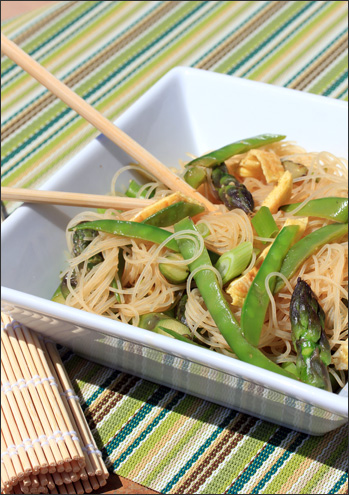
Stir-Fried Rice Noodles

I was flipping through my April/May 2011 issue of Vegetarian Times magazine and they had a “noodlemania” section that featured 5 favorite Asian noodle dishes. I would eventually like to make ALL of them, but I started with the dish that I had the most ingredients for.

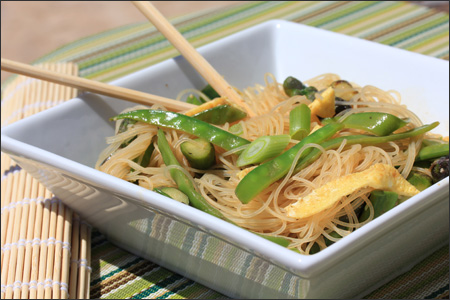
Stir-Fried Rice Noodles

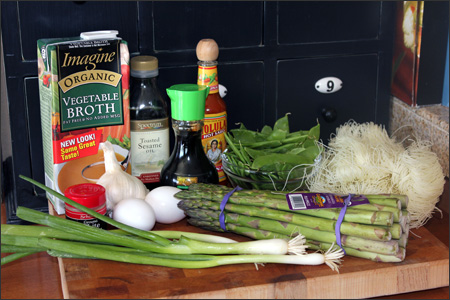
The Ingredients:
6 oz. rice sticks
2 Teaspoons Toasted Sesame Oil – divided
2 Large Eggs
2 Teaspoons Water
1/4 Teaspoon White Pepper
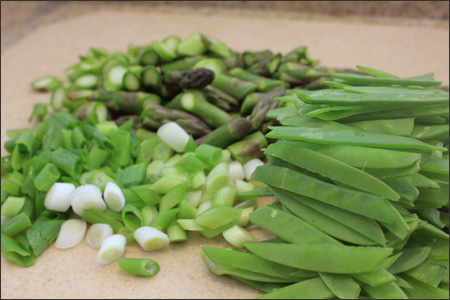
1/2 lb. Asparagus – trimmed and sliced diagonally into 1 inch pieces
7 oz. Snow Peas – trimmed and sliced lengthwise into wide strips
3 Cloves Garlic – minced
3/4 Cup Low Sodium Vegetable Broth – I didn’t have low sodium, used regular
2 Tablespoons Low Sodium Soy Sauce
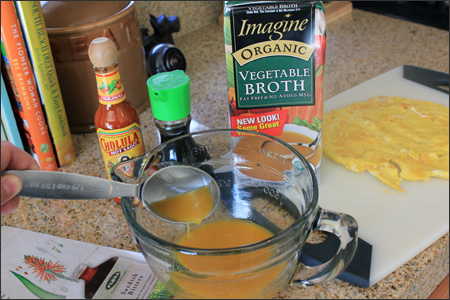
2 Teaspoons Siracha Sauce – didn’t have any, I used Cholula
3 Green Onions – thinly sliced

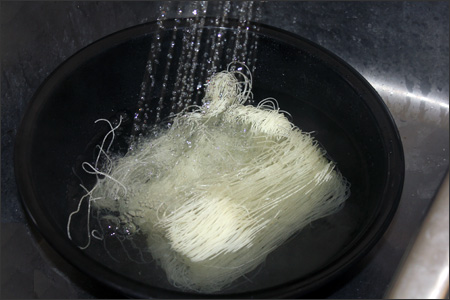
1. Soak rice sticks in a large bowl of hot water for 8-10 minutes and then drain well.
2. Heat 1 Teaspoon of your sesame oil in a nonstick skillet over medium-high heat.

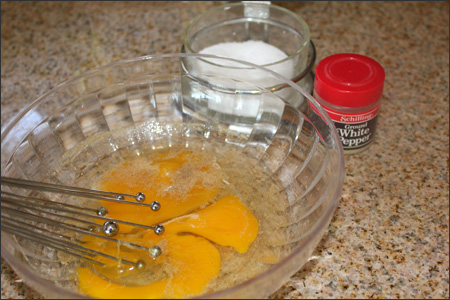
3. Whisk eggs in small bowl with 2 teaspoons water and white pepper, and season with salt.

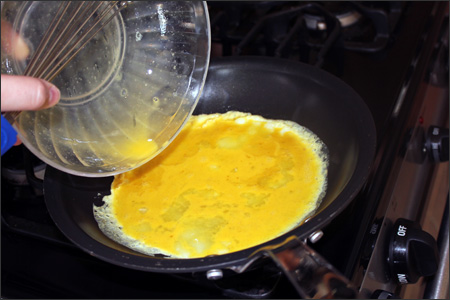
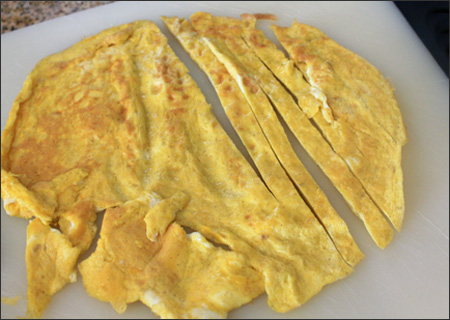
4. Pour eggs into skillet, and swirl pan so eggs cover bottom in an even layer. Cook 1-2 minutes, then carefully flip omelet. Cook 1-2 minutes more, then transfer to cutting board and slice into strips.

My flip didn’t go very smoothly. My bottom right corner got messed up.

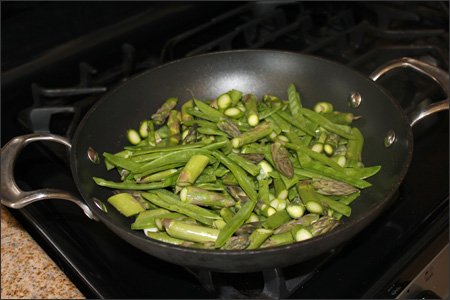
5. Heat remaining 1 teaspoon sesame oil in skillet, add asparagus and snow peas.

6. Stir-fry 3-4 minutes, add garlic, and cook 1-2 more minutes.

7. Whisk together broth, soy sauce, and hot sauce in bowl. Add the mixture to the pan with your asparagus and snow peas and bring to a simmer. Stir in rice sticks and cook for 3-5 more minutes or until the liquid is absorbed. Mix in egg strips and green onions before serving.

Nutrition Info: Per 2 Cup Serving (Serves 4)
256 cal | 9 g prot. | 5 g fat | 43 g carb.| 93 mg chol. | 385 mg sodium | 3 g fiber | 4 g sugars
Note: My sodium was higher since I didn’t have low sodium veggie broth on hand.

I really liked the dish a lot, but I would tweak it for next time. I would add more broth and I would cut the amount of noodles in 1/2. I found myself digging out the veggies and leaving a lot of the noodles. The flavor was there, I just wanted more sauce/broth.

I’m looking forward to trying some of the other stir-fry recipes. As new things come into season, I definitely increase my vegetable consumption and I’m finding that I’ve been eating vegetarian about 5 days a week. I could probably transition to full time, but every once in a while, I really do enjoy a good burger –  and I don’t mean a garden burger… all though I’m slightly addicted to those too. I would love to find a solid recipe for making my own. I’ve tried a few before and the words “wood chip” and “sawdust” comes to mind.  If you have a good recipe, let me know in comments. 🙂

Permanent link to this article: http://foodiddy.com/?p=4222

Spring Risotto w/Asparagus and Lemon

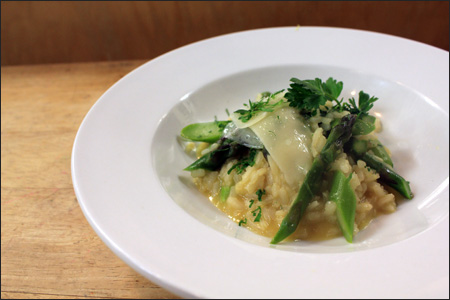
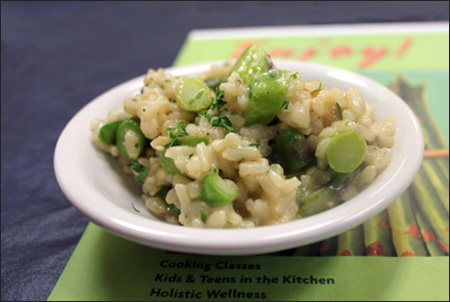
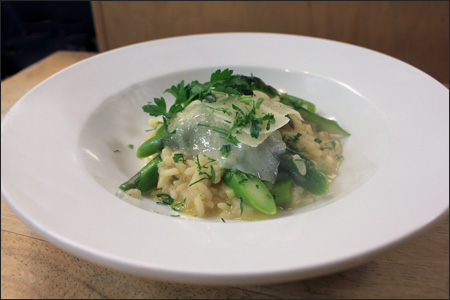
I attended the Sacramento Natural Foods Co-op’s free cooking school preview class and absolutely loved the Spring Risotto w/Asparagus and Lemon that Chef Dio prepared for the evening. It was very similar to the risotto that Chef Michael Tuohy prepared for us during the seasonal cooking class – minus the artichoke hearts and olive oil drizzle.

We had the opportunity to sign up for Spring classes and the co-op staff introduced Chef Dio and explained how the classes work. Some are hands-on classes, others are straight demo classes. The demo classes work best for me. I’m tired after a long day of work and I like knowing that I can just sit in class and listen to everything the chefs share with us. Sampling all of the delicious food is the best part.

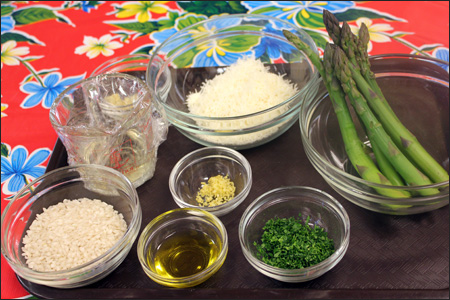
The Ingredients:
2 Tablespoons Extra Virgin Olive Oil
2 Cloves Garlic – Chopped
1 Cup Arborio or Carnaroli Rice – Chef Dio used Lundberg Farms Arborio
1/2 Cup Dry White Wine
1 Teaspoon Finely Chopped Lemon Zest
4-6 Cups Hot Chicken Stock – You could use veggie if you prefer a vegetarian dish
Sea Salt and Freshly Ground Pepper – To taste
2 Cups Blanched Asparagus – Sliced into 1 inch pieces on the diagonal
2 oz. Parmigiano-Reggiano – Grated
1-2 Tablespoons Butter – Chef Dio just used 1 Tablespoon
Zest of one Lemon – In addition to the 1 Teaspoon used during the cooking process
2 Tablespoons Chopped Fresh Parsley

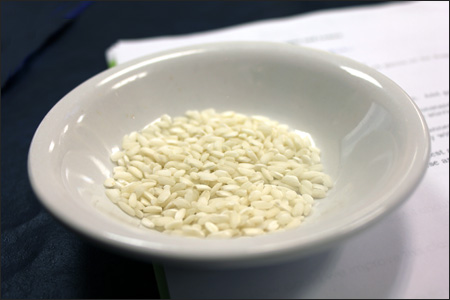
Some carnaroli rice was passed around so we could see it up close.

The Directions:

  • Heat olive oil in a large skillet or wide sauté pan over medium to medium-high heat. Add garlic and sauté for 10 seconds.
  • Add rice and 1 teaspoon zest for 1 minute, stirring constantly. Add wine and evaporate liquid. Add 1 ladle of stock while stirring rice until almost all liquid is absorbed. Note: There is a lot of sodium in most stocks – even the low sodium stocks. Keep this in mind before seasoning with additional salt.
  • Continue adding stock in the same manner (1 ladle at a time) until rice is done (about 15-20 minutes). Stir in your blanched asparagus (place in boiling water for a minute and then ice water to cool) half way through the process. Rice will be tender and creamy with a slight crunch in the center. If your rice is mushy – it means you cooked it too long.
  • Remove from heat, stir in lemon zest and parsley and season to taste with salt and pepper. Add in cheese and butter and serve immediately.

I’ve found variations of this recipe online – some use thyme instead of parsley as a finisher – some use a little onion, but they are all basically the same. If you want to add mushrooms, you need to sauté them first and add them at the very end. Chef Dio also suggested using basil as an herb that goes well with asparagus or adding shrimp to the risotto as you put the last ladle of stock into the pan.

Chef Dio also talked a bit about Parmigiano-Reggiano and it’s history. Wikipedia offers up more than you ever wanted to know about Parmigiano-Reggiano. I find the history of certain foods to be fascinating.

Take aways from the evening…
#1 – I have been storing my cheese all wrong. Cheese needs to breathe and plastic wrap or sealed Ziploc® bags suffocate cheese. Use parchment or wax paper. Place your cheese cut side down and wrap. You can then store your cheese in a bag, you just shouldn’t seal the bag. I’ve heard of people rubbing the surfaces of cheese with olive or canola oil – but I think that would change the flavor. I never knew that I was suffocating my cheese. This now makes sense as to why the cheese I get at the deli wrapped in paper lasts longer than my other brick cheeses I seal into baggies.

#2 – A substitute for Parmigiano-Reggiano is the younger aged Grana Padano cheeses. They are less crumbly, milder and less complex in flavor compared to their famous longer-aged relative. The Grana Padano is also cheaper, compared to the $18-$20 lb. price for the Parmigiano-Reggiano.

#3 – Asparagus will naturally snap at the tough part. Allow it to happen – your stems or stalks won’t be uniform in size if you leave them full length – but it will be worth it. You always want to try to go with the thinner stalks – they are the most tender. Chef Dio also showed us that you can slice the tops lengthwise in 1/2, so it looks like you have more “pretty asparagus” pieces in your risotto. Brilliant!

Anyway – this is why I enjoy taking classes at the co-op. Even though you might know some of the techniques or recipes – you always leave class with little tidbits of information. Love that!

Permanent link to this article: http://foodiddy.com/?p=4183

Pizza Secrets with Chef Rick Mahan

Pizza is my “Stranded on an island” – if you could only have one food option – choice. I love pizza more than any other food. As long as I can switch it up with toppings, I’m golden. I’ve been searching for a good pizza crust recipe – I tend to go with the easy pre-made dough from Trader Joe’s or Il Fornaio from Henry’s.
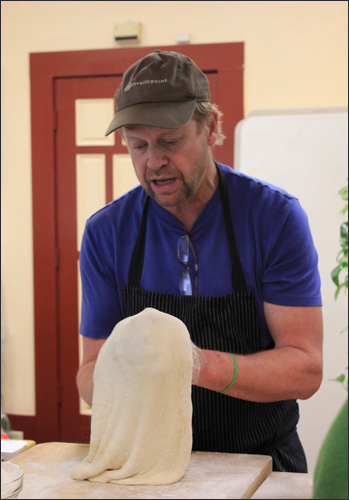
Chef Rick Mahan – chef-owner of The Waterboy and OneSpeed restaurants in Sacramento, CA –  taught the packed class at the Sacramento Natural Foods Co-op Learning Center last Thursday. The class sold out in 3 days. They created a second class for the Spring semester and that sold out too. People like pizza – and Chef Rick too!

From here on out, I will be making my own crust. Chef Rick and his pizza class showed me how easy and how tasty GOOD homemade crust can be.
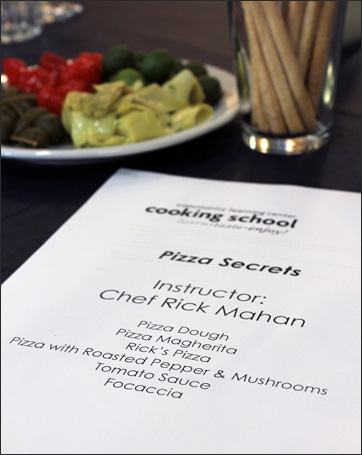
We started class with appetizers provided by the co-op.
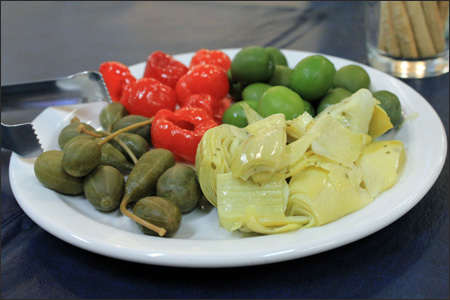
Castel vetrano olives, artichoke hearts, capers and sweet red peppers. I did not try the capers after less than favorable reviews from the table.
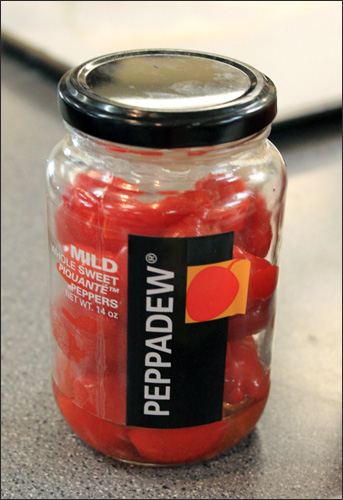
The Peppadew whole sweet piquante peppers were really good.
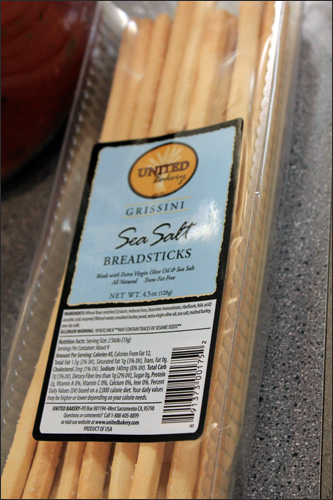
I will definitely be buying the United Bakery Sea Salt Breadsticks soon – they were awesome!

Let’s Talk Pizza…

Chef Rick’s pizza dough was the perfect combination of soft and crunchy. I’m not one for a super thin crust, but I don’t like cake-like thick crusts either.

Dough Ingredients:
(Neopolitan style crust – Makes three 12 ounce balls)
22 oz. Unbleached All Purpose Flour
1 Tablespoon Kosher Salt
1 Teaspoon Instant Yeast
1 3/4 Cup plus 2 Tablespoons Cool Water – temp about 65 dgrees

He didn’t have a problem sharing his dough recipe with all of us – even though he uses a variation of this recipe at his One Speed restaurant, it doesn’t mean it will taste the exact same – because our ovens/temperatures, water, type of yeast, brand of flour, room temps, etc. are all different.

The key to this pizza dough recipe is a long fermentation period.

Directions:

  • Add water to a large mixing bowl. Combine dry ingredients, mix and add to the water. Mix by hand or spoon for a few minutes dipping hand or spoon in cool water as needed to avoid sticking.
  • Let rest 4-5 minutes then continue mixing for another 3 minutes. (The last mix may be done on a lightly floured board – he chose to continue mixing in the metal bowl) – metal or glass bowls works best.
  • Place dough in oiled (Extra Virgin Olive Oil) bowl, brush top and sides lightly with olive oil, cover with plastic wrap and refrigerate for 24 hours. If you are making pizza the same day and don’t have time to make the dough the day before – it can be stored at room temp for 8-10 hours – that should be enough for the fermentation process. The longer the better – but don’t store in fridge past 48 hours.

Chef Rick showed us how to do the dough window pane test – this test is done to see if the gluten has been activated. Pinch off a small piece of dough, add flour so it’s not sticky – pull and rotate the dough gently to stretch the piece into a thin, translucent membrane – if it tears easily, knead a few more minutes, and then try the test again.

You can freeze the dough after it ferments. Just be sure to remove the dough from the freezer 24 hours prior to use.

Chef Rick’s Tomato Sauce
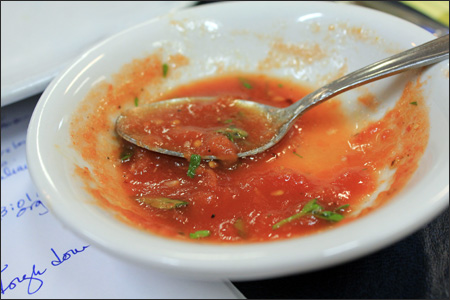
The above picture was taken after we had each taken a spoonful to taste. This tomato sauce was incredible. Very clean and simple, just the way I like it. I will never buy store bought pizza sauce again. I used my $5.00 class coupon to stock up on Strianese organic tomatoes.
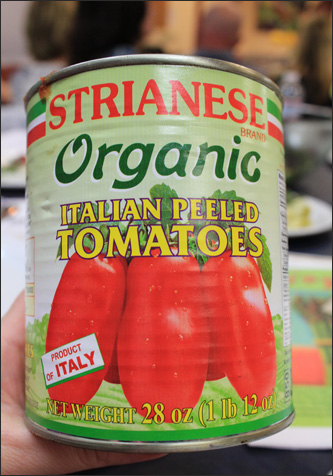
Chef Rick started with a 28 oz. can of organic peeled tomatoes. You can also used crushed – but he chose to hand crush them. He added 2 teaspoons of Kosher salt and made us all swear that we would NEVER use IODIZED salt ever again. He suggested that if we had any, we use it to melt snow during the next storm. Ha! I made the switch to Kosher and sea salt a while ago, but I do still have some iodized in the spice cabinet.  The sauce also contained 1/2 a teaspoon of black pepper, 2 tablespoons of red wine vinegar (you could also use lemon or white wine), minced garlic, crushed red chilies, fresh herbs (you could use oregano, flat leaf Italian parsley, basil or marjoram and a splash of good olive oil.)

Whisk the ingredients together and let stand for 6-8 hours in the fridge – you do not need to cook the sauce before using it on your pizza.

Pizza tip of the evening – All pizza ingredients should be pre-cooked and seasoned – they should taste great on their own. The #1 problem with raw toppings, such as mushrooms – they create too much moisture and add water to the dough.
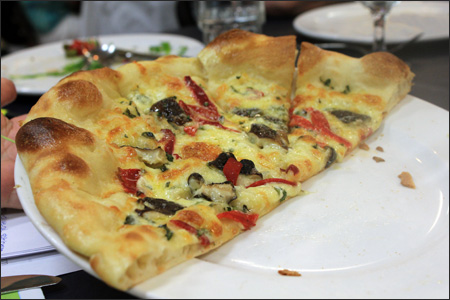
We all shared pieces of roasted pepper and mushroom pizza – grated fontina, roasted red peppers, mushrooms, fresh herbs and the best part of the entire process – heavy cream – wow… this really brought everything together. Chef Rick just poured it on the pizza before putting it into the oven to cook.
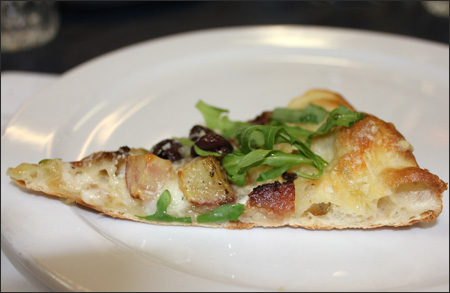
Rick’s Pizza – Chef Rick’s signature pizza –  was a favorite of the evening. Cooked diced new potatoes – oiled and seasoned with thyme, salt and pepper, grated fontina cheese, crumbled fresh goat’s cheese, pitted small black nicoise type olives, carmelized onions, pepper cured bacon, arugula and drizzled extra virgin olive oil.
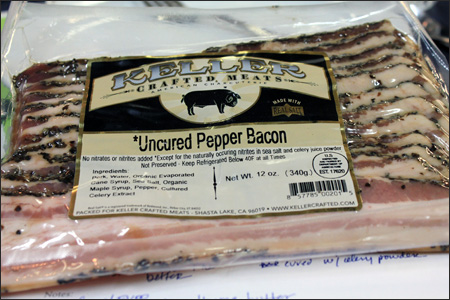
Bacon…bacon…bacon… Keller Crafted Meats  – Uncured Pepper Bacon is available at the co-op – as are all of the ingredients used in class. I highly recommend this incredible bacon.
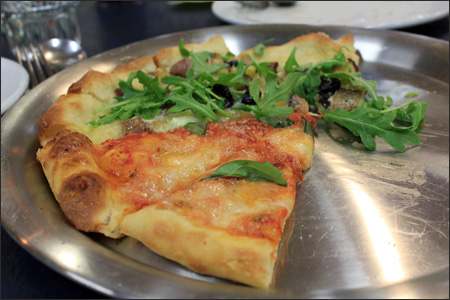
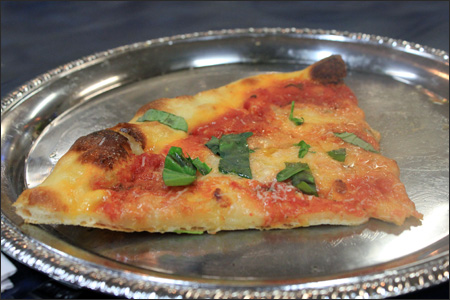
A few slices of the Pizza Margherita shared the table tray with Rick’s Pizza – super simple, the tomato sauce (recipe above), fresh mozzarella cheese (packed in water) added sea salt or Kosher to the pieces of cheese, Grated Parmigiano-Reggiano cheese, fresh basil leaves (after it comes out of the oven, you don’t want to burn the leaves) good quality extra virgin olive oil – before cooking and after.
Pizza Cooking Instructions:
Set your oven temp to as high as it will go. Chef Rick uses slabs of dark granite in his non-pizza ovens – the granite distributes heat more evenly over the surface of the food. He just keeps the granite in the oven at all times. He asked how many of us had pizza stones and a bunch of hands went up. He suggested leaving the stones in the oven for all cooking. Several people at my table already did that, mine just sits in a box in the cabinet – I don’t even use it for my pizza cooking. I will probably break it out until I get myself a piece of granite.
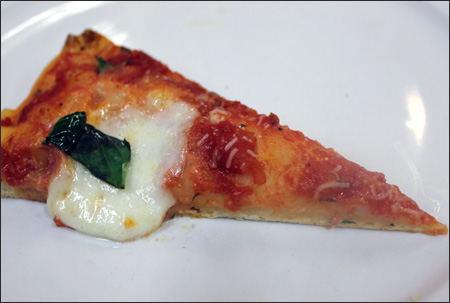
The pizza should take about 8 minutes. Do not open the oven to check on the pizza – I did that a few weekends ago while making pizza and my girlfriend Deede was horrified, LOL. Never again, I promise.

The Major Take Aways From the Class…
Practice, practice, practice… just keep trying new things and once you find something that works, leave it be and run with it. A pizza peel and flour are your friends. The wetter the dough, the crispier the crust – cold water will keep the dough from sticking to your hands. DO NOT overload your pizza with toppings. This is what I have done in the past. I’m looking forward to seeing space between my toppings.  The last tip of the evening – don’t wear a black apron when making pizza dough ;).

I am super excited to put my new pizza skills to the test. We also made an incredible focaccia, but I’m saving that for another post. I had fun in class, Chef Rick was a great instructor. I’ve been to his Waterboy Restaurant, but I have not tried OneSpeed – I will be going soon.

Question: – What’s your favorite kind of pizza? Thick/thin crust? Toppings?

Permanent link to this article: http://foodiddy.com/?p=4111